Protocol 01
Clearance and removal
Sorting and emptying a hoarded property room by room. Documents, valuables and personal effects are set aside and handed over, never discarded.
Paris · 20 arrondissements
We work in properties affected by hoarding, long-term neglect or a death. In Paris, in nineteenth-century buildings, with everything that implies.

Trained operativesFull protective equipment
What we do
A hoarded property rarely needs one intervention. It needs several, in an order that is not negotiable — you do not treat an infestation in a property you have not yet cleared.
Protocol 01
Sorting and emptying a hoarded property room by room. Documents, valuables and personal effects are set aside and handed over, never discarded.
Protocol 02
Bringing a severely degraded property back to a sound, habitable condition — including lifting floor coverings that have absorbed liquids.
Protocol 03
Decontamination after a death, including late discovery. Traceable clinical waste disposal, and a certificate at the end.
Protocol 04
Odour is removed at source, not masked. The test is simple: close the property for forty-eight hours and reopen it.
Protocol 05
Bed bugs, rodents and cockroaches. In a Paris building an infestation rarely respects lot boundaries, so the diagnosis covers the risers and the cellars too.
Protocol 06
Bringing a property to a presentable, documented state, with a dated photographic record for the owner, the notary or the insurer.
Why a Paris firm
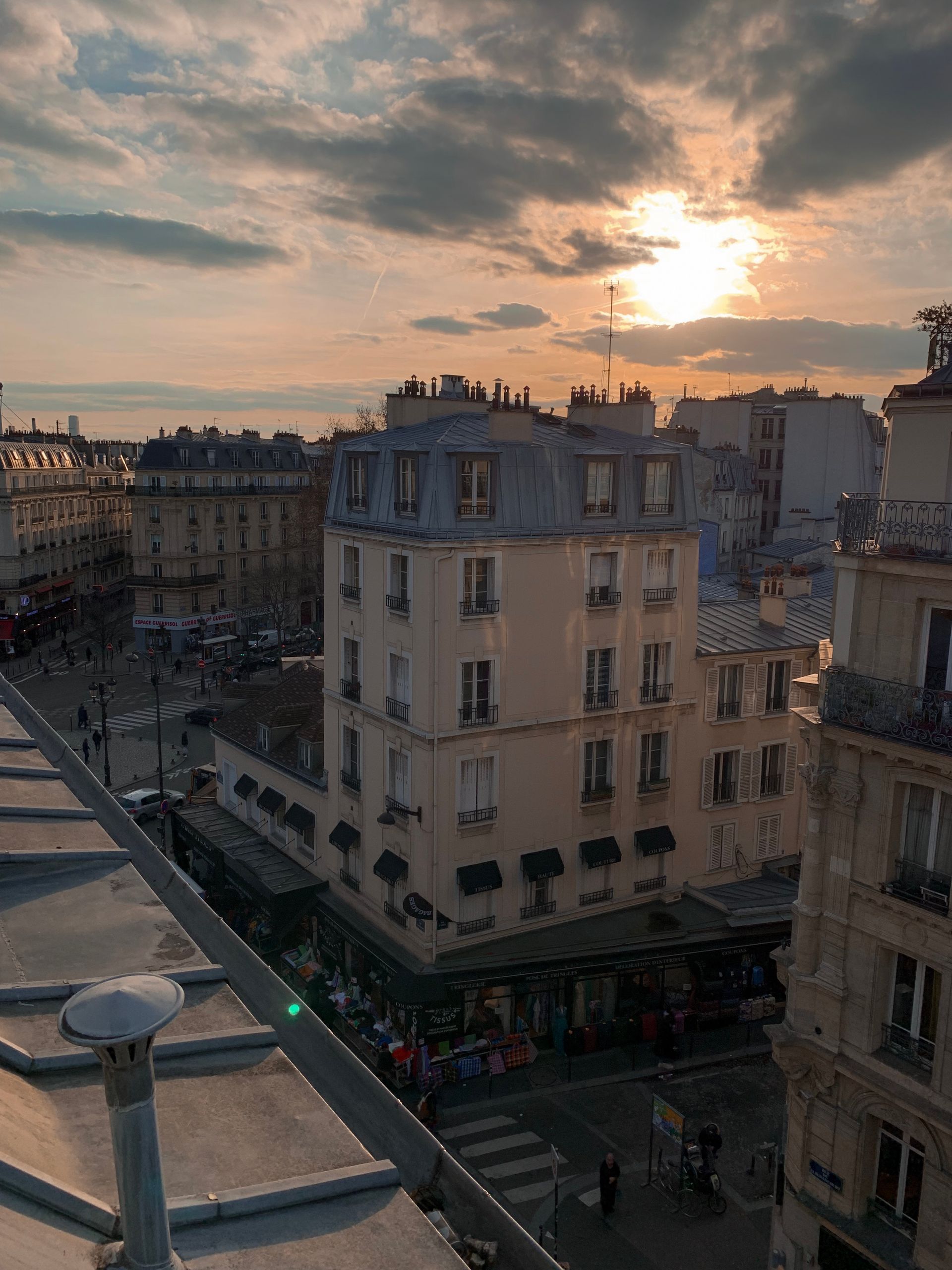
It is getting eleven cubic metres down from a sixth floor with no lift, through a staircase two people cannot descend side by side.
C1
Much of the older stock has no lift above the fourth floor, if it has one at all. Volume comes down by hand, in loads the staircase allows. This is the primary driver of duration, ahead of volume itself.
C2
Where a service staircase exists, the whole job can happen without a single resident crossing it. Its use is requested from the managing agent and the concierge in advance, never on the morning of the job.
C3
Holding a vehicle or placing a skip on the public highway requires a temporary occupation permit from the City of Paris. Where the street or the timescale does not allow it, we work in rotations with a compact van.
C4
Permitted hours, lift use, protection of common parts, bin room access — every building has its own rules, and the concierge knows them better than the managing agent does.
How we work
No logo, no company name, no phone number. No uniform identifiable from the street. No conversation about the job in the common parts.
We invoice a single, identified instructing party, agreed before the job starts rather than argued about afterwards.
Photographic record before and after, list of operations, waste transfer notes, disinfection certificate. Sent to the instructing party alone.
No fabricated review counts, no decorative certifications, no headline price. Where a figure is not verifiable, it is not published.
One person, no team, no equipment, thirty to sixty minutes. Nothing to prepare and nothing to tidy — the state of the property is precisely what we are coming to see.